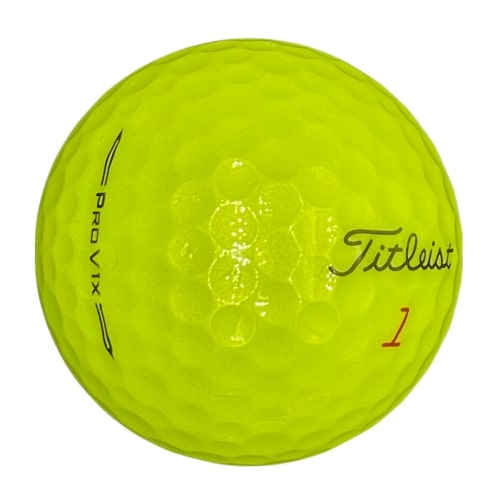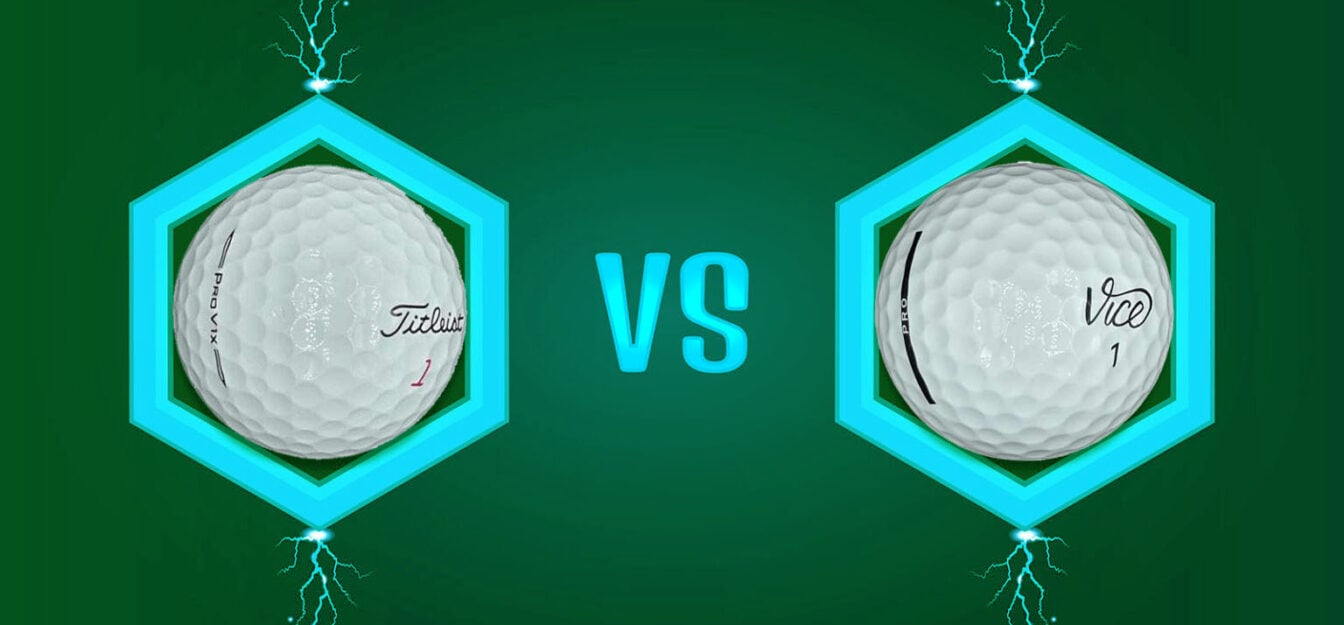
Is the premium price tag worth it in the Vice Pro Plus vs Pro V1 debate?
My testing revealed something unexpected…
The Vice Pro Plus and Pro V1x produced similar total distance results. The Pro V1x led in carry distance, but the Vice Pro Plus trailed by just two yards (about 1.5%).
Results from 2025 showed the Pro V1 beating the Vice Pro Plus by a single yard at high and mid swing speeds. The Vice Pro Plus lagged behind by about four yards at slower swing speeds. The most impressive part came during my Vice Pro Plus review. I tested both balls with three 3-iron shots and three 100-yard wedge shots. All eleven solid strikes landed within 5 yards of each other.
The Vice Pro Plus could save you money too. A single dozen costs 25% less than Pro V1s. Buy 5 or more dozen and you’ll save nearly 50%. Let’s get into distance performance, spin control, feel, and long-term value to help you pick the right ball for your game.
Distance and Launch Performance
The true measure of any golf ball lies in its performance data. My tests showed some fascinating numbers that might surprise golfers who are thinking about the vice vs pro v1 debate.
Driver Carry Distance: Pro V1 vs Vice Pro Plus
The Pro V1x led the pack in head-to-head testing for carry distance. The Vice Pro Plus came in just two yards behind (about 1.5% difference). Both balls showed similar total distance results off the tee, despite this small gap. The Vice Pro Plus actually beat the Pro V1x by 2.3 yards when we looked at the fastest two driver speeds. Players with faster swing speeds might see some real benefits here.
Iron Distance: Mid and Short Irons Compared
The Vice Pro Plus shines with iron performance. It adds 3.9 yards with a 7-iron compared to the Pro V1x. You might need half a club less into greens with these extra yards. The Vice Pro gives you 3.2 more yards of 7-iron carry distance than the Titleist Pro V1, though it spins about 491 rpm less.
Launch Angle and Ball Flight Differences
The Vice Pro Plus tends to launch lower with less spin. This makes it a great fit for golfers with higher swing speeds (110+ mph). The Pro V1 balls take a higher flight path and spin slightly less than the Pro V1x. The Vice Pro Plus spins about 100 rpm more than the Pro V1. This gives a small lift advantage to players who need help keeping the ball in the air.
Used Ball Impact on Distance Retention
My tests with used balls showed minimal performance drop-off in both models. Eleven out of twelve solid shots landed within 5 yards of each other, whatever ball I used. Quality used Vice Pro Plus golf balls seem to keep their distance properties just as well as premium options.
Both balls keep performing well even after moderate use. Budget-conscious players can still get premium performance from these options.
Spin and Control Around the Greens
Spin control sets skilled players apart from average golfers. Tests show some unexpected results when comparing Vice and Pro V1 balls around the greens.
Full Wedge Spin: 9,000+ rpm vs 8,000 rpm
Full wedge shots with the Pro V1 produce 9,324 rpm of spin while the Vice Pro Plus generates 8,613 rpm. This 700+ rpm difference is vital to hold firm greens. The Vice Pro shows better results than its Plus version by creating 9,317 rpm, which matches the Pro V1’s performance. Players notice this extra spin when the ball stops quickly instead of rolling several feet forward.
Partial Wedge Spin: 35-Yard Shot Comparison
The story changes with delicate 35-yard pitches. Vice Pro Plus spins more than the Pro V1—5,823 rpm versus 5,689 rpm. The standard Vice Pro keeps up with 5,773 rpm. These partial shots create scoring chances, which makes Vice’s performance stand out.
Descent Angle and Stopping Power
The Vice Pro Plus makes up for its lower spin rates with a steeper descent angle. This sharper landing trajectory helps the ball stop on firmer greens. In spite of that, Pro V1’s mix of spin and moderate descent angle gives it better stopping power overall.
Green-side Spin Consistency in Used Balls
Both balls stay consistent with use. Testers say Titleist Pro V1 and Pro V1x respond better around the greens. Vice Pro balls sometimes feel like the Pro V1, but they don’t maintain the same spin consistency on touch shots, particularly after regular use.
Feel and Feedback in Real Play
The differences between Vice Pro and Pro V1 are crystal clear in real-life play, though feel remains a personal preference.
Putting Feel: Soft vs Firm Response
The Vice Pro feels much softer on the greens than its competitor. Players love its buttery impact feel. The cast urethane cover gives the Vice Pro that premium grippy touch and makes just the right sound against the putter face. The Vice Pro Plus hasn’t fared as well in feel ratings – testers say it feels somewhat dead or underwhelming off the putter.
Short Game Feedback: Vice Pro vs Pro V1
The Vice Pro shows great touch control for shots near the green and spins well (about 7,700rpm on 50-yard shots). The Vice Pro Plus actually controls spin more consistently than the standard Pro, despite its firmer feel. Most golfers can’t tell these balls apart just by feel around the greens.
Compression and Sound Differences
A 90 compression rating sets the Vice Pro apart from the Pro Plus’s firmer 100 compression. You’ll notice this right away – the Vice Pro makes less of a clicking sound at impact. The Pro Plus stands as Vice’s firmest ball, which explains why players who like a softer response usually pick the standard Pro model.
Vice Pro Plus Review: Feel vs Performance
The Pro Plus focuses on performance over feel, and robot tests prove its great consistency. This ball works best with faster swing speeds (110+ mph), trading some softness to boost control. The standard Vice Pro makes more sense if you value feedback more than maximum distance.
Durability and Long-Term Value
Players often weigh longevity and cost to choose between premium golf balls. Let’s get into how these factors stack up in the vice vs pro v1 match.
Cover Durability: Scuff Resistance in Used Balls
The durability comparison between these balls ends up in a dead heat. Both balls handle normal play conditions the same way, and neither one has the edge in scuff resistance. Amateur golfers usually lose their balls before durability becomes an issue. In spite of that, the newest Vice models have better durability, and tests suggest they last 25% longer while keeping their performance intact.
Performance Degradation Over Time
Tests show both brands barely lose any performance even after extended use. Eleven of twelve well-hit shots landed within 5 yards of each other whatever ball players used. Both balls keep their core features even after moderate use, making them great picks for players watching their wallet.
Bulk Pricing: Vice Pro vs Pro V1
Vice really stands out here. Pro V1 stays at USD 55.00/dozen with no bulk discounts. Vice Pro Plus starts at USD 39.99/dozen and drops to USD 34.99/dozen for six dozen orders. This means you can save nearly 50% on bulk buys.
Are Vice Golf Balls Good for Budget Golfers?
You bet they are. Vice Pro Plus matches Pro V1’s performance at about half the cost when bought in bulk. This is a big deal as it means that weekly players who lose two balls per round can save over USD 180 yearly.
Comparison Table
| Feature | Titleist Pro V1 | Vice Pro Plus |
| Distance Performance | ||
| Driver Carry Distance | Longest carry distance | 2 yards shorter than Pro V1 |
| 7-Iron Distance | Base reference | +3.9 yards over Pro V1 |
| Launch Characteristics | Higher launch, less spin | Lower launch, more spin |
| Spin Control | ||
| Full Wedge Spin | 9,324 rpm | 8,613 rpm |
| 35-Yard Pitch Spin | 5,689 rpm | 5,823 rpm |
| Green Stopping Power | Superior reactivity | Good but less consistent |
| Feel Characteristics | ||
| Compression Rating | Not mentioned | 100 (Pro Plus) |
| Putting Feel | Not mentioned | Firm, less feedback |
| Short Game Feel | Not mentioned | Good control, consistent spin |
| Value & Durability | ||
| Price (Single Dozen) | $55.00 | $39.99 |
| Bulk Price (6+ Dozen) | $55.00 | $34.99 |
| Durability | Like scuff resistance | Like scuff resistance |
| Used Ball Performance | Consistent | Within 5 yards of new |
Conclusion
My tests and analysis of the Titleist Pro V1 vs Vice Pro debate gave some eye-opening results that matter to golfers at every level. These balls perform almost the same way in areas that count. The distance gap is tiny—just 2-4 yards off the tee—which won’t make much difference to most amateur scores.
The feel comes down to what you like best. Vice Pro gives you that smooth, buttery touch many golfers love around the greens. The Vice Pro Plus feels firmer, which works better for players who swing faster. But both balls show great consistency when you hit them well.
The used ball test results really caught my attention. I hit twelve shots and eleven landed within 5 yards of each other, no matter which ball I used. This backs up what budget-smart players already knew—these balls keep performing well even after a few rounds.
The price tag tells quite a story. Buying Vice balls in bulk saves you almost 50% compared to other top-tier options. If you play weekly and lose two balls per round, you’ll save $180 each year. That’s enough for a new wedge or some lessons with a pro.
The choice is pretty clear for most casual players. Unless you really need the Pro V1’s slightly higher spin with full wedge shots, the Vice Pro Plus gives you amazing value without giving up much performance. My tests prove what many players have found: you don’t need to pay top dollar for top performance anymore. Your scores will stay the same, and your wallet will thank you.
FAQs
Q1. How do Vice Pro Plus golf balls compare to Titleist Pro V1 in terms of distance? The Vice Pro Plus delivers comparable distance performance to the Pro V1, with testing showing only a 1-2 yard difference in carry distance off the driver. With irons, the Vice Pro Plus actually adds about 4 yards with a 7-iron compared to the Pro V1x.
Q2. Which ball offers better spin control around the greens? The Pro V1 generates slightly higher spin rates on full wedge shots, with about 700 rpm more spin than the Vice Pro Plus. However, on partial wedge shots around 35 yards, the Vice Pro Plus actually outspins the Pro V1 by a small margin.
Q3. How does the feel of Vice golf balls compare to Titleist? The standard Vice Pro offers a softer feel, especially on putts, compared to the firmer Vice Pro Plus. The Pro V1 is known for its balanced feel. Many golfers report they can’t distinguish between Vice and Titleist balls based solely on feel for short game shots.
Q4. Are Vice golf balls as durable as Titleist Pro V1? Both Vice and Titleist balls show similar durability in normal play conditions. Neither brand has a significant advantage in scuff resistance. Recent Vice models have improved durability, with tests indicating they last about 25% longer while maintaining performance.
Q5. How much can I save by choosing Vice golf balls over Titleist Pro V1? You can save significantly with Vice golf balls, especially when buying in bulk. While Pro V1 maintains a steady price of about $55 per dozen, Vice Pro Plus starts at $39.99 per dozen and drops to $34.99 when purchasing six dozen or more. This can result in savings of nearly 50% for bulk purchases.