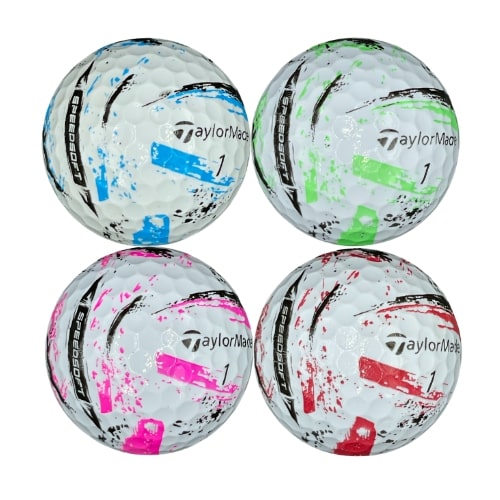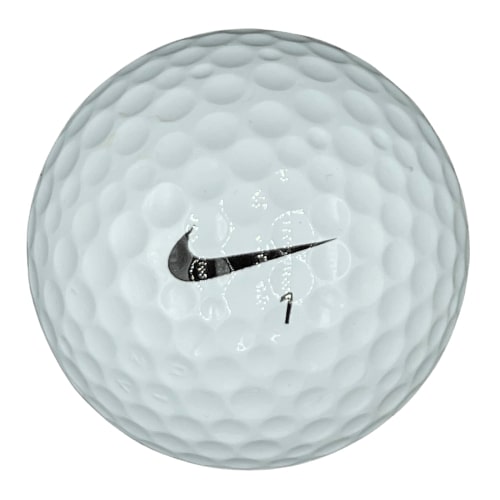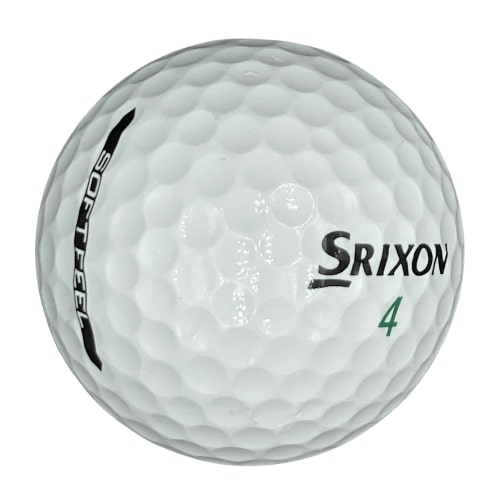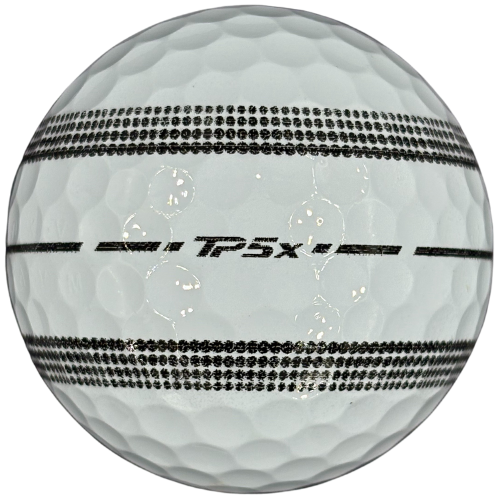
Reclaimed golf balls offer budget-conscious players a tempting alternative to expensive new ones, but do they actually perform the same?
Many golfers wonder if these lake-recovered treasures can deliver comparable distance, spin, and durability to fresh-from-the-factory balls.
Despite costing 30-70% less than new balls, questions about their performance persist.
When considering refurbished golf balls, understanding the differences becomes crucial for making informed decisions. Actually, the retrieval process, quality grading, and refurbishment methods significantly impact how these balls perform on the course. Furthermore, the potential environmental benefits of choosing reclaimed balls add another dimension to this decision.
This comprehensive guide examines the truth about reclaimed golf ball performance based on real testing. We’ll specifically compare flight characteristics, spin rates, and durability against new balls, helping you determine if the savings justify any performance differences. Ultimately, whether you’re a weekend warrior or serious player watching your budget, this analysis will help you make the right choice for your game.
What Are Reclaimed Golf Balls?
Every year, millions of golf balls disappear into water hazards, thick rough, and wooded areas of golf courses. These lost treasures form the foundation of the reclaimed golf ball market—an industry that gives these abandoned balls a second life while offering players substantial savings.
How they are collected and processed
Professional divers equipped with specialized gear retrieve balls from ponds and water hazards, often collecting thousands in a single dive. Moreover, course walkers, homeowners adjacent to courses, and even maintenance staff gather balls from rough areas, trees, and abandoned sections.
Once collected, these wayward balls begin their journey back to playable condition. First, they undergo thorough cleaning to remove dirt, algae, and debris. Subsequently, each ball is carefully inspected for quality, then sorted according to brand, model, and physical condition. The most meticulous reclamation facilities implement a structured grading system:
- Mint: Nearly indistinguishable from new balls
- Near Mint: Slight cosmetic imperfections with excellent performance
- Good Grade: More visible cosmetic flaws, ideal for practice or casual play
After grading, the balls are packaged and distributed to retailers or sold directly to consumers through various channels.
Difference between refurbished and recycled
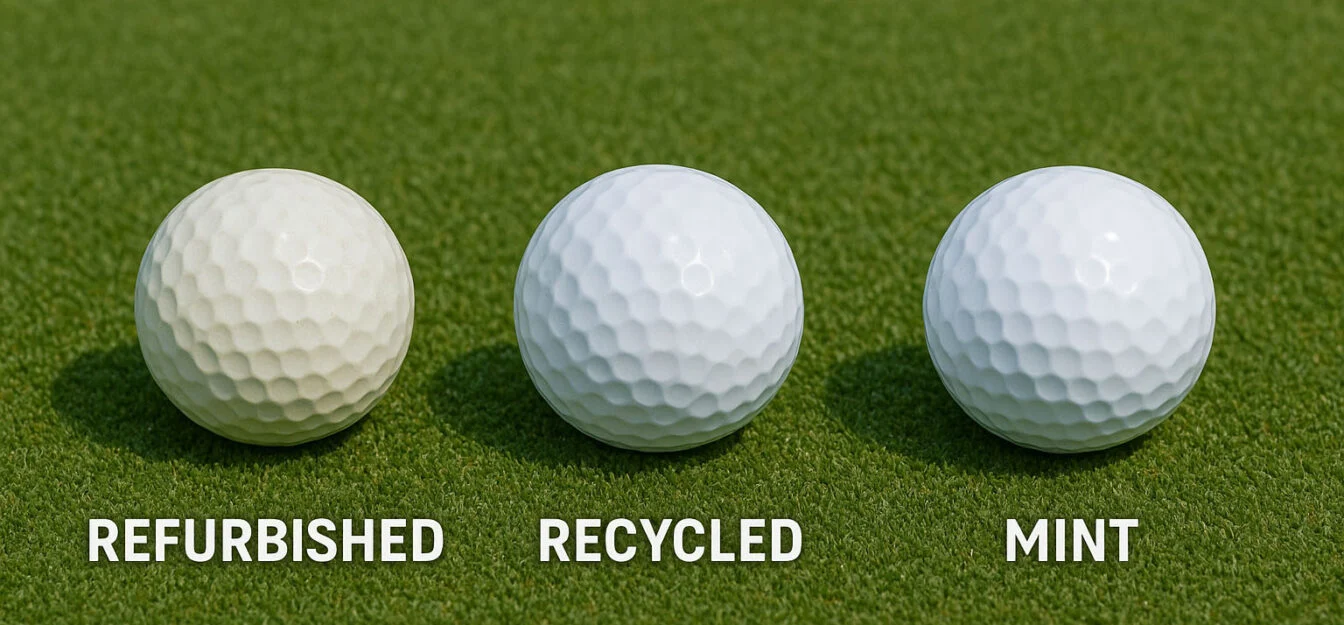
Although often used interchangeably, these terms represent distinct processes. Recycled golf balls are simply cleaned and sorted without altering their original appearance. Beyond basic washing and debris removal, no structural changes occur—essentially, what you see is what you get.
In contrast, refurbished golf balls undergo a more extensive restoration process. This typically includes:
- Thorough cleaning to remove surface blemishes
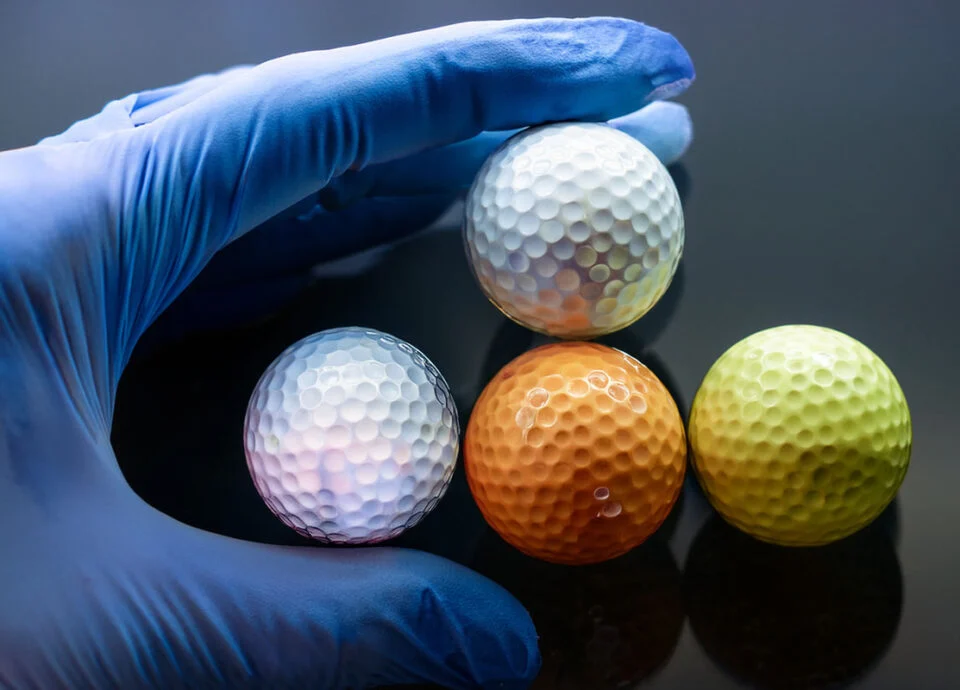
- Stripping the outer layer through sandblasting
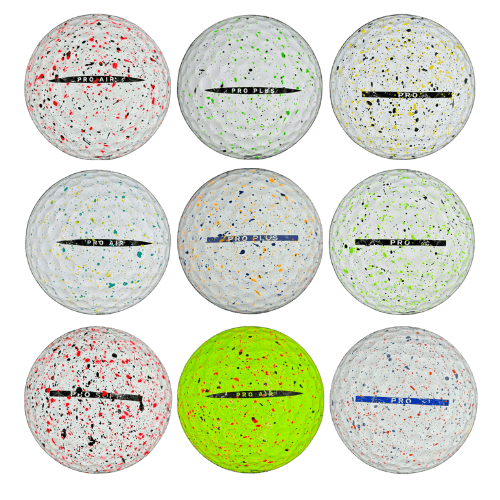
- Repainting and reapplication of logos
- Adding a new clear coat for protection and shine
The refurbishing process aims to restore the ball to a like-new appearance, yet this intensive treatment may affect performance characteristics such as spin and distance. Meanwhile, recycled balls maintain their original characteristics but often display more cosmetic blemishes like sun bleaching or paint fading.
Common misconceptions
One prevalent myth suggests all reclaimed balls come from water hazards. In reality, many are retrieved after being hit just once or twice and lost in rough areas. Additionally, many golfers incorrectly assume reclaimed balls inherently perform worse than new ones. However, high-quality recycled balls undergo testing to ensure they deliver comparable spin, control, and distance.
Some players believe recycled balls have compromised structural integrity, particularly those submerged in water for extended periods. While prolonged water exposure can potentially affect a ball’s internal structure , reputable sellers categorize balls based on quality to address this concern.
Perhaps the most persistent misconception is that reclaimed balls are exclusively for beginners or casual players. In truth, many serious golfers, including professionals, use mint or near-mint recycled balls even for competitive play. The performance difference remains negligible for most golfers, making reclaimed balls a cost-effective option without sacrificing quality.
How Reclaimed Balls Compare to New Ones
The debate over whether reclaimed golf balls can match the performance of new ones has been settled through extensive testing. Scientific studies have revealed surprising results about just how closely these pre-loved balls perform compared to their brand-new counterparts.
Distance and flight consistency
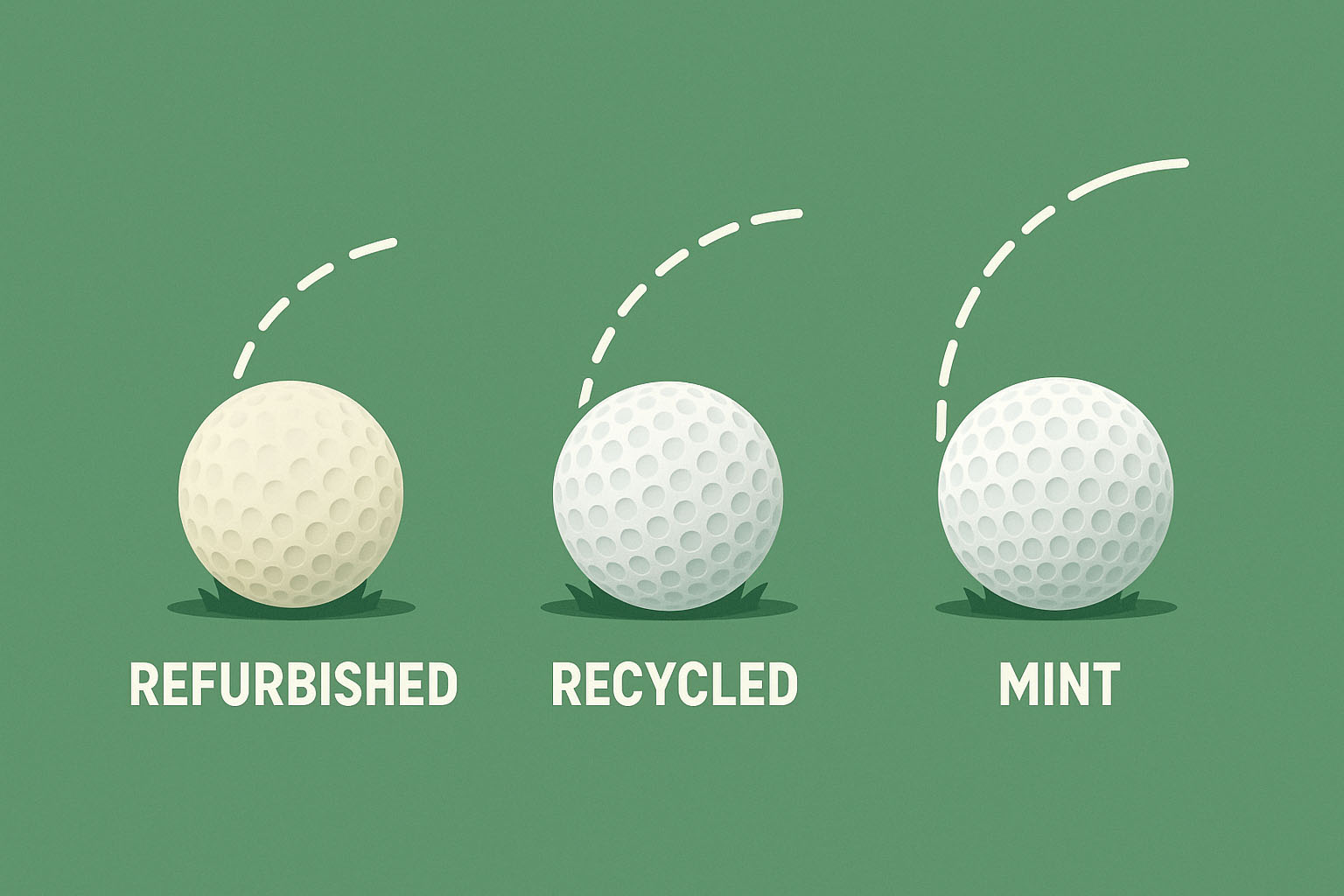
Contrary to popular belief, high-quality reclaimed golf balls show remarkably similar distance performance to new ones. In controlled testing with drivers, balls submerged in ponds for one month lost only 2 yards in carry distance and 5 yards in total distance compared to new balls. Even more surprising, balls recovered after three months underwater showed even smaller differences—just 5 yards in carry distance and 2 yards in total distance.
Most notably, even after spending five months submerged, reclaimed balls lost merely 6 yards in carry distance and 1 yard in total distance. For perspective, these differences fall well within the normal shot-to-shot variation of most golfers.
Launch monitor data confirms these findings across various brands. When comparing mint-condition recycled Titleist Pro V1s with new ones, the total carry distance difference was just 5 yards (6 vs. 1 yards), representing approximately 1% less distance. This minimal difference becomes essentially unnoticeable during actual play.
Spin and control on the green
Perhaps even more critical than distance is how reclaimed balls perform around the greens. Testing shows that spin rates—crucial for shot control—remain virtually identical between new and reclaimed balls. With driver shots, reclaimed balls submerged for various periods maintained nearly identical spin rates compared to new balls, with differences of merely 11 RPMs (3019 vs. 3008) for one-month submersion.
Sand wedge testing—the true test for spin performance—revealed no measurable differences between high-quality reclaimed balls and new ones. This consistency proves particularly important for players using premium balls specifically chosen for their spin characteristics.
Ball speed and launch angles also remain consistent between quality reclaimed and new balls, with differences so minimal they fall within normal testing variance. Even the ball flight paths tracked by launch monitors show virtually identical patterns between new and reclaimed balls.
Durability and wear over time
Beyond immediate performance, durability presents another consideration. Golf ball cores naturally undergo a slow curing process that continues after manufacturing, causing balls to firm up gradually over time. A ball measuring 90 compression when new might approach 100 compression after sitting for two to three years.
For average golfers, this gradual firming rarely impacts performance enough to notice. However, the condition of the ball’s cover matters significantly more than its age or water exposure history. Tests confirm that balls with intact covers perform similarly regardless of age, while those with serious surface damage showed dramatically different flight characteristics—up to 40 yards less carry distance and 45 yards off target.
The research consensus shows that high-quality reclaimed golf balls with undamaged covers deliver essentially the same performance as new balls. For most recreational players, the minimal performance differences remain imperceptible during regular play, making reclaimed balls an excellent value proposition.
Pros and Cons of Reclaimed Golf Balls
Making the switch to reclaimed golf balls involves weighing several important factors. For many golfers, the decision comes down to understanding both the advantages and potential drawbacks. Let’s examine what you gain—and what you might sacrifice—when choosing recycled options.
Pros: Cost savings, eco-friendly, brand variety
First and foremost, the financial benefit stands out as the most compelling reason to choose reclaimed golf balls. Players can save between 30-70% compared to buying new balls. For instance, a dozen new Titleist Pro V1 golf balls costs approximately USD $99, whereas the same quantity of recycled Pro V1s sells for just USD 99—a 50% reduction. This dramatic price difference allows golfers to purchase twice as many balls for the same investment.
Beyond personal savings, choosing recycled golf balls delivers significant environmental benefits. Millions of golf balls end up lost or discarded each year , with each taking hundreds of years to decompose naturally. By purchasing reclaimed balls, players actively reduce:
- Manufacturing waste from new ball production
- Raw material extraction and processing
- Carbon emissions associated with manufacturing
- Golf course waste accumulation
Indeed, the environmental impact extends further—the production process for new golf balls involves substantial energy use and resource consumption. Through reusing existing materials, recycled golf balls create a smaller environmental footprint overall.
Another often overlooked advantage is brand accessibility. Recycled golf balls come from all major manufacturers—Titleist, Callaway, TaylorMade, Srixon, and Bridgestone. This variety allows budget-conscious players to experience premium balls they might otherwise consider too expensive. In fact, some reclaimed balls even come from courses used for PGA Tour events, meaning you could potentially play with the same ball a professional once used.
Cons: Performance variability, cosmetic flaws, shorter lifespan
On the other hand, not all recycled golf balls deliver consistent performance. The quality can vary significantly depending on the ball’s history and recovery process. Even with careful grading systems, performance characteristics like spin, distance, and feel might differ slightly between balls in the same batch. This inconsistency can be particularly problematic for serious players who rely on predictable ball behavior.
Equally important, cosmetic imperfections remain unavoidable with most reclaimed balls. Even after professional cleaning, many display visible signs of previous use—slight scuffs, discoloration, faded logos, or player markings. While these blemishes rarely affect performance, they may be esthetically displeasing to golfers who prefer pristine equipment.
The shortened lifespan presents perhaps the most legitimate concern. Recycled balls—especially those recovered from water hazards—may have a reduced usable life compared to new balls. The refurbishing process itself can sometimes affect durability, as the restoration procedures might not fully rejuvenate the ball’s structural integrity. Consequently, golfers might need to replace recycled balls more frequently than new ones.
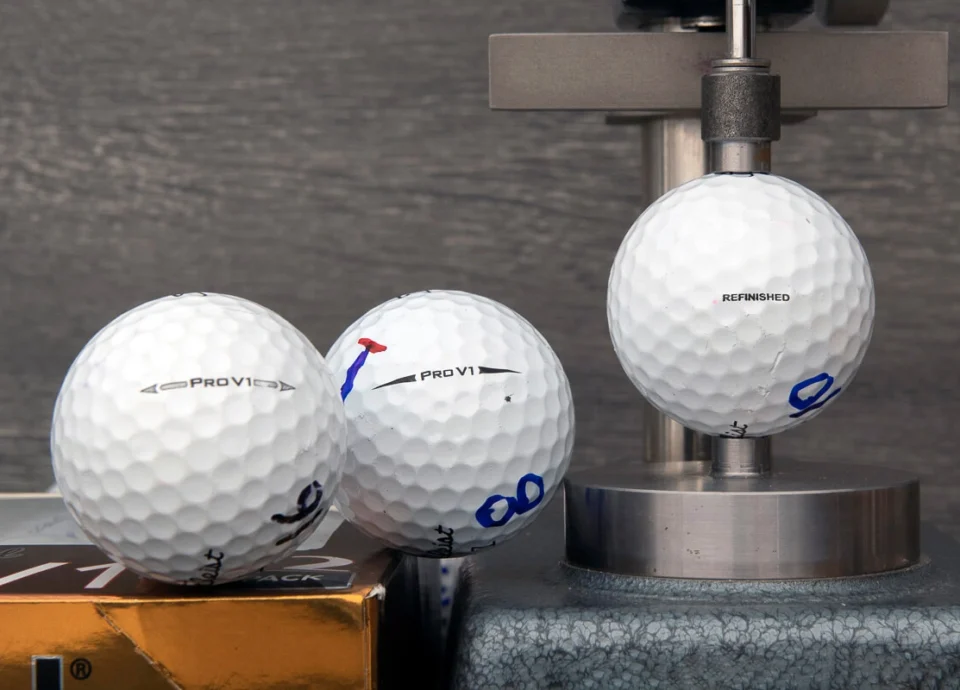
Furthermore, refinished balls (those that undergo stripping, repainting, and clear coating) may experience more significant performance issues than simply cleaned and sorted balls. The refinishing process can potentially alter the ball’s weight distribution and aerodynamic properties, affecting distance and accuracy.
In conclusion, for recreational players and those practicing frequently, the minor performance variations and cosmetic issues rarely outweigh the substantial cost savings and environmental benefits. Conversely, competitive players might find the consistency and longevity of new balls worth the premium price.
Price Breakdown: Reclaimed vs New
The financial gap between new and reclaimed golf balls represents one of the most compelling reasons players consider pre-owned options. Understanding these price differences—alongside quality considerations—helps golfers maximize value without sacrificing performance.
Average cost per dozen for each type
Brand new golf balls typically cost between $24-$48 per dozen for standard balls and up to $120 for ultra-premium models. In stark contrast, reclaimed golf balls generally range from $50 to $00 per ball for recycled versions (simply cleaned).
This pricing structure creates substantial savings opportunities:
Condition Price Per Dozen Savings vs. New:
- New: $24-$55
- Mint/Refurbished: $20-$30 = 15-45%
- Recycled: $6-$20 = 55-85%
For budget-conscious players, these differences allow purchasing twice as many reclaimed balls for the same cost as new ones.
Best value brands and models
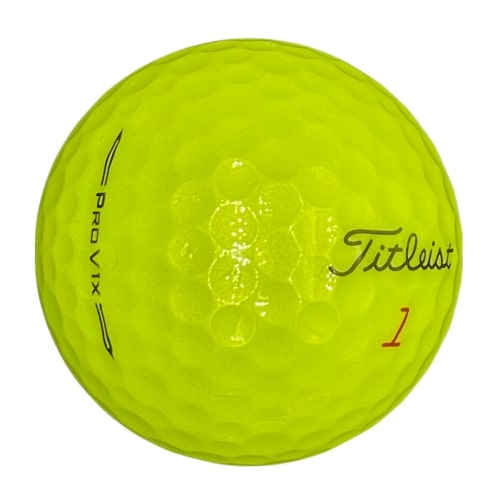
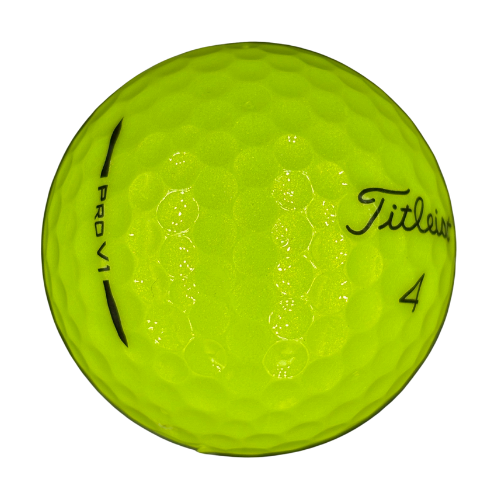
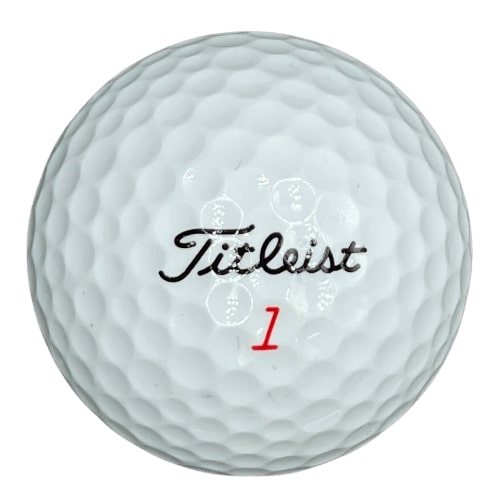
Among reclaimed options, certain premium brands deliver exceptional value. Titleist Pro V1 balls—retailing new at approximately $55 per dozen—can be found in mint condition for around $30 and recycled for $25. Likewise, TaylorMade TP5/TP5x balls (new: $50) are available in mint condition for $25 and recycled for $15.
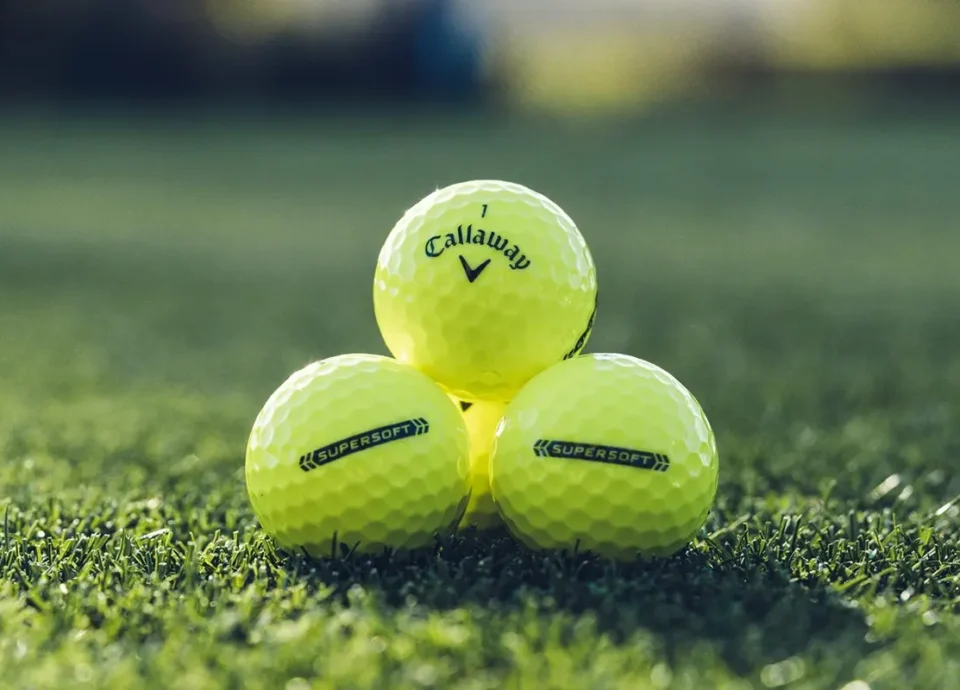
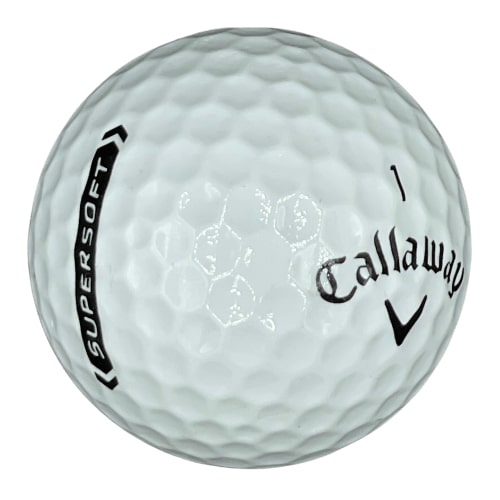
Yet the best value often comes from mid-tier options. Callaway Supersoft balls, priced new at $25 per dozen, cost just $20 in mint condition and $10-$11 recycled. This modest investment yields balls that perform remarkably well for average golfers.
When paying more makes sense
Given the minor performance differences between new and high-quality reclaimed balls, when should players invest in new ones? Primarily, competitive tournament players seeking absolute consistency might benefit from new balls. Likewise, golfers with very specific performance needs—such as those requiring precise spin control—may find new balls worthwhile.
Within the reclaimed market itself, mint condition balls usually justify their higher price compared to lower grades. The modest additional cost typically delivers substantially better performance and durability, making them better long-term investments despite the higher initial outlay.
Above all, the decision ultimately depends on your playing frequency and skill level. High-volume players who lose balls regularly benefit most from recycled options, while occasional players might prefer fewer, higher-quality balls.
Where to Buy and What to Look For
Finding reliable sources for reclaimed golf balls requires understanding both where to shop and how to interpret the various grading systems used in the industry.
Grading systems explained
Initially confusing, grading scales follow a fairly standard pattern across retailers:
- Mint/5A/AAAAA: Appear nearly new with no visible wear
- Near Mint/4A/AAAA: Slight cosmetic blemishes but excellent playability
- Good/3A/AAA: Noticeable scuffs but no cuts, suitable for casual play
Some retailers use golf terminology instead—Eagle (A quality), Birdie (B quality), and Par (C quality). Pristine or “no logo” balls represent a premium subcategory guaranteed to have no player markings
Tips for choosing the right condition
Match your selection to your playing situation—professionals and serious golfers should opt for Mint condition, while casual players find excellent value in Near Mint. Yet value seekers should consider “refinished” options, which undergo cleaning, repainting, and clear coating to restore like-new appearance.
Before purchasing, verify the seller’s return policy and inspect the detailed grading descriptions to ensure you’re getting precisely what you expect.
Wrap Up
After extensive testing and analysis, reclaimed golf balls clearly offer exceptional value for most players. High-quality recycled balls perform nearly identically to new ones, with distance differences so minimal—often just 1-2 yards—they remain undetectable during actual play. Spin rates, ball flight paths, and control characteristics likewise show remarkable consistency between new and properly graded reclaimed balls.
The financial benefits prove equally compelling. Players save between 30-70% when choosing reclaimed options, essentially doubling purchasing power without sacrificing meaningful performance. This value proposition becomes particularly attractive for recreational golfers who occasionally lose balls or practice frequently.
Environmental considerations further strengthen the case for reclaimed balls. Each recycled ball represents reduced manufacturing waste, decreased resource extraction, and lower carbon emissions—small individual choices that collectively create significant ecological impact.
Still, player-specific factors should guide your decision. Competitive tournament players might justifiably prefer new balls for absolute consistency. Casual weekend golfers, however, will likely find mint-condition reclaimed balls perfectly suitable for their needs.
Quality grading remains the most critical factor when purchasing recycled balls. Mint or near-mint condition balls from reputable retailers deliver the best combination of performance and value. These carefully inspected balls undergo thorough cleaning while maintaining their original characteristics without potentially damaging refinishing processes.
Ultimately, reclaimed golf balls represent a smart choice for budget-conscious players. The performance differences remain negligible for most golfers, while the savings prove substantial.
Your game likely won’t suffer when using high-quality recycled balls—though your wallet will certainly thank you.